
WauTechFocusing on stainless steel processing and manufacturing
WauTechFocusing on stainless steel processing and manufacturing
The forming process of stainless steel insulated cups is the core of their manufacturing. Currently, there are mainly two technical routes: the connection process centered on welding and edge finishing (mainstream), and the seamless process that pursues the one-piece forming of the cup body (high-end/emerging).
The following table compares the characteristics and processes of these two main technical paths:
| Technical path | Core technology link | Brief process flow | Main features/purposes |
| Welding finishing path | 1. Bulging/spinning forming | Tubular billet → bulging (using polyurethane punch or water bulging) or spinning → rough billet | Shape the straight tube into the general form of the cup body. |
| 2. Butt welding connection | The body of the cup is respectively butt-welded to the rim/bottom of the cup | Combine to form a complete cup body structure. | |
| 3. Forcefully close the mouth | Apply strong radial compression to the weld seam on the finishing machine | Key steps: Significantly reduce the diameter of the cup mouth and smooth out the weld seam to achieve a "visual seamless" effect. | |
| Seamless forming path | Integral spinning forming | Tubular billet → multi-pass thinning and spinning → one-piece cup body | One-step forming, no weld seams. It saves materials, has high precision and good comprehensive performance. |
How to choose between the two paths?
The main difference between the two processes lies in the weld seam:
The welding finishing path is currently the mainstream process, which is economical and efficient, can meet most demands, and the finished product is close to "seamless".
Seamless forming path (integral spinning) is a more advanced process. It fundamentally avoids weld seams, can improve the vacuum qualification rate and structural integrity of products, and is mostly used in high-end products.
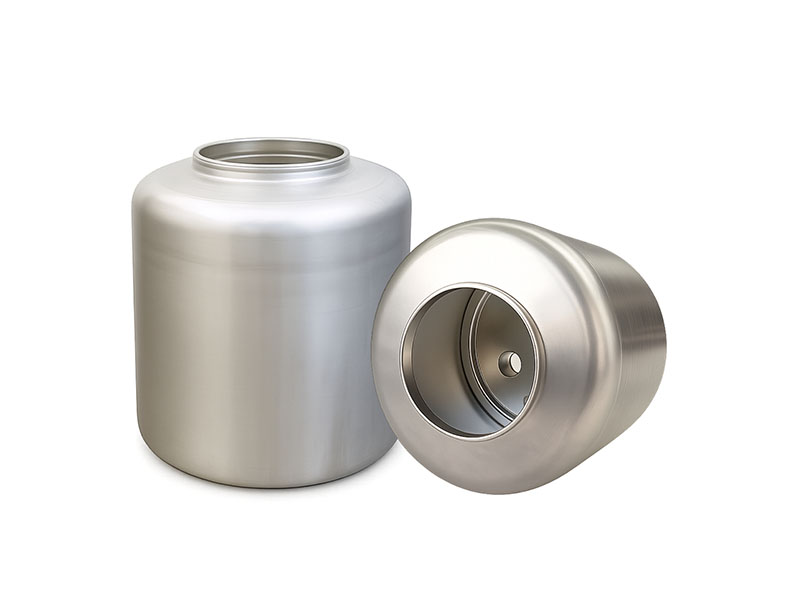
How to choose between the two paths?
The main difference between the two processes lies in the weld seam:
The welding finishing path is currently the mainstream process, which is economical and efficient, can meet most demands, and the finished product is close to "seamless".
Seamless forming path (integral spinning) is a more advanced process. It fundamentally avoids weld seams, can improve the vacuum qualification rate and structural integrity of products, and is mostly used in high-end products.